Read on to discover how belly dancing truly is rehab disguised as dance and learn:
- A very common posture people are “stuck” in with chronic back pain
- How belly dancing moves us out of this unhelpful posture
- The powerful biomechanical changes this produces within our bodies
- Which medical conditions and symptoms may benefit from belly dance and why
- Whether belly dance is right for you
This blog post is written by Holly Keeler, Osteopath, M.Ost, after attending my belly dance classes, and I hope you’ll enjoy her perspective on why belly dancing is such a powerful way to move and heal our bodies.
People with chronic lower-back pain are often stuck in one particular posture
The most common posture I see with people seeking help for their persistent back pain: arched lower back, pelvis tipped forward, ribs flared. This posture puts a lot of excess strains on our bodies in the following ways:
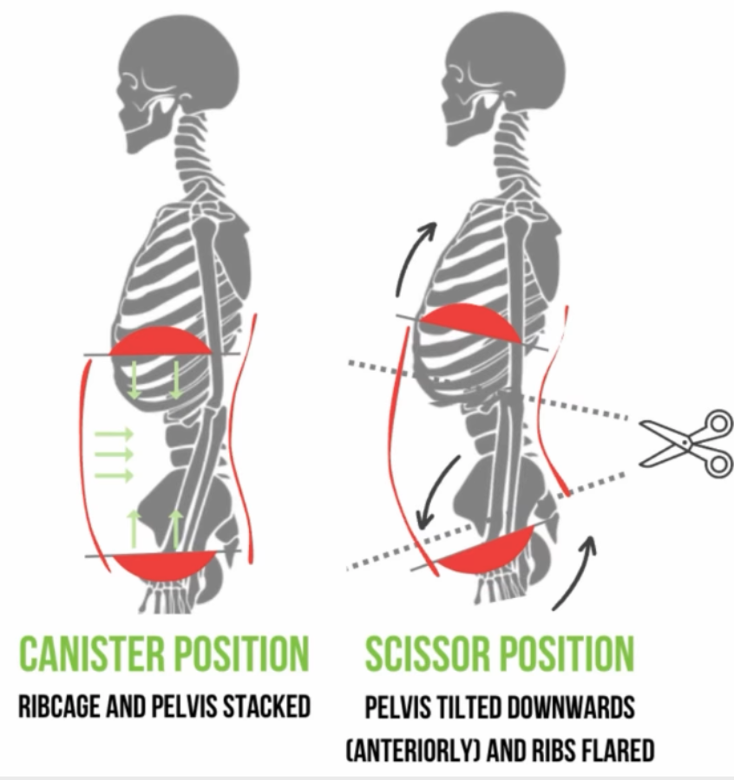
Joints: The joints at the back of our spines that move and support our spinal segments are constantly compressed
Muscles: Our core is pulled long and can’t engage properly to help stabilize or drive movement. Lower back muscles are overworking to generate movement and stability under compression
Breathing: The pressure mechanics that our core, pelvic floor, and diaphragm rely on to function optimally are imbalanced, meaning our breathing muscles work overtime (cue tight necks!) and our spines are left with minimal support
How belly dancing gets us out of this unhelpful posture
The first thing taught in belly dancing is finding your “neutral” pelvic alignment- this involves “stacking” our ribcage on top of our pelvis, removing excessive back arching and rib flaring.
Now while some of us may be able to find this posture relatively easily, unless we learn how to integrate this posture with movement, the body will simply revert back to old habits.
Luckily, belly dancing is all about how to remain in this posture while we move through space – this is partly why dancers wear the hip belts – the waistband provides a visual marker for where our pelvis is in space.
For beginners, it’s a real challenge not to revert back to this tipped forward posture which allows our bodies to “cheat” to gain an appearance of bigger movement by repeatedly jarring open the front of our bodies. However, this is exactly what we must overcome to retrain proper movement mechanics.
While remaining in our stacked posture, we teach our bodies that it is possible to rotate, lift and move our pelvis and ribcage without tipping forward.
The powerful biomechanical changes produced within our bodies
Now that our core and rib muscles aren’t pulled wide and open, they can naturally contract and engage – helping out our struggling backs.
Our spinal muscles aren’t fighting like crazy to try to force movement under compression, our spinal joints release and back muscles truly lengthen.
We feel engagement (and sometimes soreness!) in areas we never truly felt before – (in between the ribs, our deep core) – for a long time our postures have not allowed us to utilize these muscles properly.
It’s also common to have a rotation through the pelvis, a pelvis that’s higher on one side, or ribs sticking out more on one side. Over time, these imbalances naturally iron out the more we engage and lengthen the muscles connecting our pelvis to our spine and ribcage.
Establishing the stacked posture and increasing rib mobility helps our big breathing muscle (diaphragm) contract and relax properly, moving up and down freely, this drives correct pressure changes in our bodies cavities that produces efficient respiration and assists digestion.
Which medical conditions could belly dance help with and why
When we breathe, pressure is created and distributed through our trunk: to our diaphragm above, to our core muscles and organs all around, back toward our spine, and down to our pelvic floor.
Moving and being in this stacked posture allows our big breathing muscle (diaphragm) to contract and relax properly, moving up and down freely.
This balanced pressure can help improve symptoms in conditions that are often linked to pressure imbalances, such as:
- Pelvic Floor Dysfunction
- Diastasis Recti
- Hiatus/Inguinal Hernia
- Acid Reflux
- Breathing difficulties
- Chronic neck pain
- Chronic bloating/abdominal discomfort
- Lower back disc herniation/degeneration
Is belly dance right for you?
From a biomechanics perspective, it is one of the most complete forms of core, breathing and pelvic training you can do! It hands-down beats pilates when it comes to core strength and corrective posture: you will activate, strengthen and stretch all of the muscles of your core in every direction. Watching in the mirror and wearing the hip belt lets you see if your pelvis is in the correct alignment throughout until it becomes second nature.
Last but not least, if you’re wondering whether you have the skills or flexibility to belly dance, this Osteopath does it with a titanium fused spine that’s almost entirely immobile (and zero natural dance ability).
If you would like to find out whether anything discussed in this article can help you, book in at my clinic Posture Positive for an Initial Osteopathy Consultation. We will conduct a thorough Osteopathic assessment of your posture, breathing, and discover any pelvic imbalances, offering you hands-on treatment alongside personal rehabilitative exercises to help rebalance your body.
If you’re ready to jump straight in and try it out, we highly recommend Ishtar Dance, led by Dorte, experienced instructor and fellow anatomy geek, she is most welcoming and skilled in teaching in a manner that truly allows you to connect with your body and feel the movements while all importantly having a blast! She teaches future belly dance instructors as part of the international organisation “Belldance Now”, which aims to raise the standards of bellydance worldwide. All their certified teachers will be able to teach you how to belly dance and improve your posture.
Holly Keeler, Osteopath, M.Ost
Dorte
Did you miss my last post? Read it here: Dancing for mind, body and spirit











Leave a Reply